





Leadership Development: Is it a Lost Cause or is there still Hope?
Leadership is a highly valued and greatly sought-after quality. So much so that Barbara Kellerman says it’s mentioned in almost every mission statement in Harvard’s schools. As it stands, companies are pumping huge money into leadership development programmes (Deloitte estimate a figure of $31 billion in 2015), but it doesn’t seem to be making much difference.
So why isn’t Leadership Development working?
I’m strongly of the view that leaders can be developed, as I’m the walking, talking, living proof of that.
I think it’s really simple. There’s this notion that leaders are born and not developed, and I would seriously challenge that assumption. I’m strongly of the view that leaders can be developed, as I’m the walking, talking, living proof of that. I’ve had to completely change my style, develop different behaviours and competencies, and change the way I work. It seems to me that leadership development programmes are far too generic. They cover things that may not be necessary or appropriate for the person or role in question.
To develop an effective leader, it’s much more important to be able to look at the person as an individual. Customise their leadership development programme to measure their unique behaviours, motivators, acumen, driving forces and EQ. See how they fit the leadership requirement, identify any gaps, produce a development plan and implement it! And then once it’s in place, set up a plan for feedback and review. Develop a 360 process where you can genuinely see whether or not it’s working – where it’s clear whether or not behaviours are changing and learning is taking place.
What’s the best approach?
Firstly, you need to benchmark the role. Identify the characteristics required to be successful in terms of behaviours, driving forces, competencies, acumen and EQ. What kind of person is required to be effective in that role? To be a leader in this company and in this role, what is required? Then you need to measure the individual against this and see how they match up. Having identified gaps, put a development plan in place.
TTI have a very simple and effective development plan which lets you benchmark a role, identify gaps and then create and manage the development plan. Then when the person is being reviewed once a month by their boss they’re looking at KPIs but they’re also looking at whether the person is effectively implementing the development plan or not. It can be time consuming to set up at first, but once it’s in place everything becomes so simple. Take a role where you have a challenge and start there, and slowly make your way through the organisation.
You might find leaders emerging where you might never have expected it.
You can read more about our leadership development tools here.

6 Types of Unconscious Bias in Recruitment (and How to Avoid Them)
Unconscious bias in recruitment impacts on how we perceive and judge people, how friendly we are towards people and how much we really listen to people, among other things! It affects who we invite for an interview, why we hire them and how we interact with them when they’re eventually hired.

7 Simple Tips to Make Your Life Extraordinary
Expect greatness and greatness will follow. An attitude of gratitude opens the door for more good to come in. Likewise with offering up the negative. Work to see the good in every situation. Remember that opportunities are like buses. There’s always another one coming along, so don’t rush into making a decision.

13 Top Tips for Effective Communication in Recruitment
Developing effective communication in recruitment means working on understanding. It means no more hiring on the fly. It means being prepared and aiming to understand the behaviours, motivators, driving forces, acumen and competencies of everybody you’re working with – including your colleagues, candidates and clients.
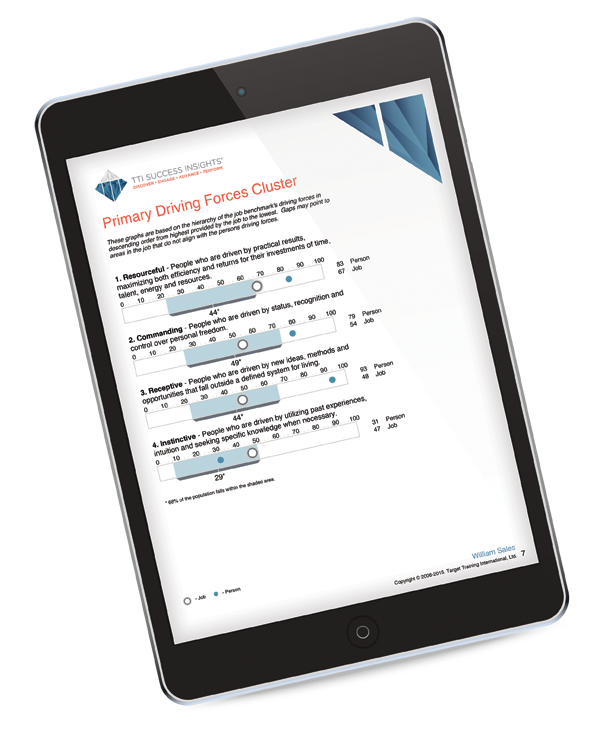
FREE DISC Assessment: Find out what your behaviours really are!
Have you ever taken a DISC Assessment? Actually… Have you ever taken a TTI DISC Assessment? Well why wait any longer, lets find out why you really behave the way you do!