





How to develop presenting skills for leaders
Why presenting skills are so important for leaders
Whether it’s a CEO looking to inspire a team, a football coach’s final words before competition begins or a politician’s campaign speech, clear and convincing communication has a significant impact on achieving success.
Let’s start by looking at why, using the example of a CEO.
If you’re poor at presenting, you might experience some of the following results:
- Loss of respect
- Confusion amongst the team around what they’re expected to be held accountable for
- An unclear vision
- Damaged credibility
- Time wasted during ineffective presentations that fail to get the point across
- Frustration as a result of the point above
- Damaged reputation as a result of putting on a false persona during presentations
Do any of these seem uncomfortably familiar?

The truth is that even leaders are accountable to others. It could be a board of directors or customers on a shop floor, but either way it is their responsibility to communicate clearly and present effectively.
Although presenting is consistently recorded as a significant fear for many, it IS something that can be developed and worked on. Anybody can become good at presenting and develop this powerful skill.
What is presenting all about?
According to The Complete Leader, presenting skills can be defined as the ability to communicate effectively to groups. It is one of the qualities associated with leaders leading others.

Leaders who are skilled presenters are able to communicate their ideas in a logical sequence and in an understandable way while effectively using language, images, stories and humour.
They vary their tone and use nonverbal communication such as eye contact and gestures to capture their audience’s attention.
Critically, they also project self-confidence, conviction and passion.
Are these skills that you would like to adopt while presenting? Below are some tips to help you on your way.
How to improve your presenting skills
Start by being authentic
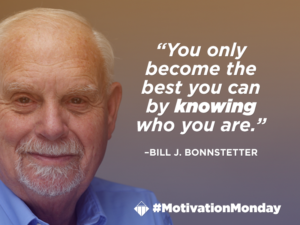
The most important thing about presenting is to be authentically yourself. Bring your own best self to your presentation and don’t try to be anyone else. Craft a version of public speaking that fits who you are and what you do best.
When you stand up, the first few moments are crucial. The audience haven’t connected with you yet and this is the moment to bridge that gap. They will quickly tune into you and form first impressions. From the outset the very simplest ways of doing this are by smiling and saying thank you.
Don’t accept invitations to speak about something you don’t know or care about, and be careful with the timing and delivery of your jokes.
Ron Price recommends developing a powerful presence in your day to day life. Dress each day as if you’re interviewing for the role of CEO, imagine all your conversations are simulations for the interview and keep your desk tidy.
Be authentic and naturally develop your presenting skills through training in your everyday life.
That way, when you take to the podium, you will automatically have a powerful presence and be true to yourself.
Control your nerves
Understand that nerves are a natural part of presenting. You’re standing there in front of a large group and the feeling of potential judgement can be palpable.
Dr Amy Cuddy from Harvard has done some really interesting research and has found that certain poses and postures can lower cortisol (a stress hormone) and increase feelings of power. Check out her Tedtalk or read her paper if this could help you overcome your anxiety.

To calm your nerves, put your audience first. Try to get rid of your self-consciousness by thinking about the difference you want to make in your speech.
Practice deep breathing and choose to interpret your feelings of anxiety as excitement for the opportunity.
Sometimes nerves can be conquered by working on your emotional intelligence. It takes skill to be able to control one’s emotions and remain confident while presenting to others.
As Shawn Kent Hayashi from The Complete Leader put it, presenting is more than just crafting a clever message and delivering it in an engaging way, it’s about the self talk that goes on between our ears.
Prepare, prepare, prepare
To develop world class presenting skills, you must first be sure to prepare!
When framing your story and crafting your message, HBR recommends using stories, metaphors and narratives to engage your audience. Don’t try and cover too much but instead go deep and leave your listeners with an ‘aha moment’.
Plan your delivery carefully. Are you going to use bullet points on cards or memorise your presentation?
Think about how you’re going to own the stage. What kind of body language are you going to use and how are you going to make eye contact?
Once you’ve prepared all that, make sure you know how to work the technology you’re going to use! Think of backup plans in the event of technological failure.
If something does go wrong, don’t apologise too much. Do what needs to be done to fix the issue and get on with things.
Final thoughts…
Presenting skills are vital for effective leaders. As Dale Dixon from The Complete Leader points out, in our current climate of 124 character Tweets and short and snappy LinkedIn posts, our way of communicating is changing.
Being able to present is important for capturing people’s attention and helping them understand what the vision is.
If you would like to improve your presenting skills, start by being yourself. Keep in mind that all you’re doing is having a conversation, so there’s no reason not to be your authentic genuine self.
To keep your nerves in check, consider trying some power poses and think about the message you want to deliver.
Finally, adequate preparation is essential. Put time into planning your message, your delivery, stage presence and use of technology.
If anybody has any feedback or comments from their own experience of presenting, feel free to get in touch. We would love to hear from you.
Would you like to join a leadership community to help you on your journey? We are the founders of the Complete Leadership Ireland LinkedIn group, which is full of great resources and discussion to help you become a more effective leader. We would love to have you with us.

Diplomacy and Tact- 10 Signposts to the Leadership High Road
I want you to pause for a moment and ask yourself a tough question? Are you a Leader who possesses the skills of tact and diplomacy? Are you the type of person who treats others fairly, in a sensitive and effective way?

10 Powerful Tips to Negotiate Effectively as a Leader
Negotiation a really important leadership skill because we need to optimise our relationships inside our organisation, with our customers or vendors. We do this by developing the ability to explore and to identify what everybody wants and by creating new solutions that satisfy everybody’s interests so it’s not compromise, it’s really what we call synergism- where the whole is greater than the sum of it’s parts.

The remarkable life- How to live by your values.
Articulating your values #1 As part of our planning process we spend a lot of time working on operating principles or values. Somebody asked me the other day to share some of my values with them and I thought it might be useful to do an Insight on it. I want to...
Discover Your Leadership Style TODAY!
- First step to being a leader is knowing yourself. If you don’t understand yourself how can you understand others? Learn to understand others better.
- Learn what your true behaviours and driving forces are.
- Identify what leadership competencies you are strong in and where you can improve.