





Padraig’s Insights: On Rhythm, Delegating Up and the Rockefeller Habits
The importance of rhythm
I was reminded today of the necessity to practise what you preach. People, strategy, execution and cash are the essentials for any business, and the key to all of this is rhythm, I’m sure of it.
We’re trying to build a rhythm in our company in terms of the way we function. Specifically, we’re building a rhythm in our meetings and our interpersonal communication. We have a fixed time for our team meeting every week, as well as our 30 minute one-on-one meetings.
I’m the head coach – that’s how I see myself – and my goal is, as Verne Harnish would say, to work with my direct supports, rather than my direct reports. The aim? To find out what’s working, what’s not working, and what’s next.
I have found these 30 minute meetings to be very beneficial. I’m feeling very good about them. I feel that I’m communicating a lot better with my team and everyone seems a lot happier.
For our weekly team meetings we’re using a super simple sheet from Verne Harnish’s book ‘Scaling Up’ called ‘Who, What and When’.
I’ve started taking my meeting notes based around the question ‘who’s doing what?’. It’s super simple, super effective and it holds everybody accountable. Great tool, I highly recommend it!
When we’re working for an organisation, we need to know if we’re doing the right things.
We need feedback to help us to understand whether we’re on track and what we need to work on.
Secondly, we need some process of accountability that will force us to face up and fess up, to record what we’re doing and present what we’ve done. We need to deliver on our promises for ourselves and the organisation.
The problem of delegating up…
One of the biggest problems that CEOs have – as far as I can see – is engaging their senior team. Having gone through the process of finding the best people, quite often they find that these people are delegating back up to them somehow or another, or aren’t taking responsibility for their deliverables.
This seems to be a perennial problem. I think it’s 50% the actions and management style of the CEO – i.e. if he’s allowing people to delegate upwards, getting too involved in the decision-making process or not allowing them to fail and learn.
This can disempower people.
But equally I think the problem points to a lack of process itself.
Probably there isn’t absolute clarity around key accountabilities, around the professional competencies, the rewards, the culture, the technical skills that are required and what the person brings to the party – their strengths, their weaknesses, what they can and cannot do.
To improve this, a model is required that addresses why the job exists, what the main responsibilities and core competencies are for the role, and what the best support structures should be. It needs to be used on a weekly basis.
I also think that teams need to get together on a regular basis and look at their communication styles, so that they can get to the point where barriers are removed and people are less conscious of their weaknesses – as everyone knows them anyway!
This allows people to get support to build on their strengths and mitigate their weaknesses.
So, this whole thing of teams – of people being disengaged or failing to take responsibility for their roles – is a big issue. Teams have to become accountable. I suggest using the job scorecard, a simple and effective model that we developed.
The Rockefeller Habits
I did a strategy workshop with a team the other day, which was the third of six workshops lasting a half day each, and I got a surprise. The surprise was that I had given them an exercise to do called the Rockefeller Habits.
These were the ten habits that Rockefeller claims that he used to build his business.
The feedback from the group was that it was excellent, so we scored it and we’re going to give it an internal audit on a regular basis. This idea of the team doing quick internal audits on themselves and doing them again every three months is a really good idea.
Final thoughts…
Regular one-on-one and team meetings can make a huge difference to communication. By ensuring clarity around key accountabilities, CEOs can avoid the trap of upwards delegation. I highly recommend the Rockefeller Habits questionnaire. It’s really simple and a great way to get your team to focus on what matters and on the gaps in what they’re doing.

How to Live Life on Your Own Terms
Great leaders face up to reality. I love Ron Price’s list of coaching questions from The Complete Leader. Ask yourself these questions to improve your capacity to think clearly, to lead yourself and others, to be authentic and deal with the facts. If you’ve been feeling listless lately, write out your to-do list, single out the essential two or three things you can do with your day and take action!

How to Become a More Empathetic Leader
One of the best things a leader can do for themselves is to learn to be more empathetic. Working on your empathy brings many positive side-effects, including more positive interactions with others and a greater level of tolerance and understanding.

How to be a Healthier, More Effective Leader
I was chatting to a client the other day and he had lost 11 kilos in 6/8 weeks, which is really quite remarkable. He lost it by cutting out bread and getting a personal trainer. We were talking about the effect it was having on his performance. I’ve been a long time believer in the Latin phrase ‘mens sana in corpore sana’, meaning a sane mind in a healthy body.
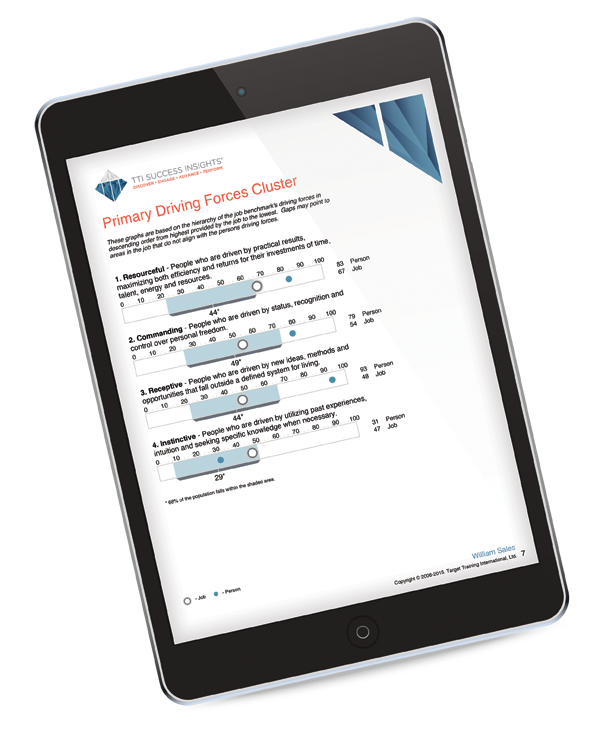
FREE DISC Assessment: Find out what your behaviours really are!
Have you ever taken a DISC Assessment? Actually… Have you ever taken a TTI DISC Assessment? Well why wait any longer, lets find out why you really behave the way you do!