





The Impending Leadership Drought: Are You Prepared?
A leadership drought is coming.
Think of a desperate farmer who knows that his land is in poor condition, but he keeps farming it year in, year out, until eventually nothing will grow.
A lot of organisations out there are in the same boat.
They don’t seem to know it yet but there’s a good chance they’ll experience problems with leadership in the next decade.
In your average business right now you’ll find five generations: Gen 2020, Millennials, Gen X, Baby Boomers and Traditionalists.
These different generations all come with different life experiences, different expectations and different skillsets.
What’s interesting is that the proportion of these groups is set to change.
In just three years time, the US Bureau of Labor Statistics predicts that Millennials (individuals born between 1980 and 2000) will make up 50% of the entire US workforce.

Clearly this means that big changes are happening in the way organisations are run.
If you haven’t seen this in your industry yet, don’t worry. You soon will.
It’s time to take our heads out of the sand.
Ask yourself honestly – am I doing enough to prepare the leaders of tomorrow?
What have you done to address any concerns you have about the future leadership of your organisation?
To truly differentiate your business in the future, you need to ensure your organisation is ready for these seismic shifts in leadership.
And this takes preparation.
As Ron Price from The Complete Leader points out, many Millennials find that strategic thinking and problem solving come naturally to them.
After all, they grew up in the age of video games!
But what they struggle with is their interpersonal skills – conflict management skills in particular.
People need training in how to be effective leaders, and as it stands Millennials don’t have much knowledge or training in this area.
If these people are the future innovators and creative thinkers who will become business leaders in the next five to ten years, they need to be trained.
We must bridge the gap.
Research by Deloitte tells us that 89% of executives surveyed said that the improvement of organisational leadership is an important priority, but as you can see from the graph below, businesses aren’t nearly ready enough to implement great changes in leadership.
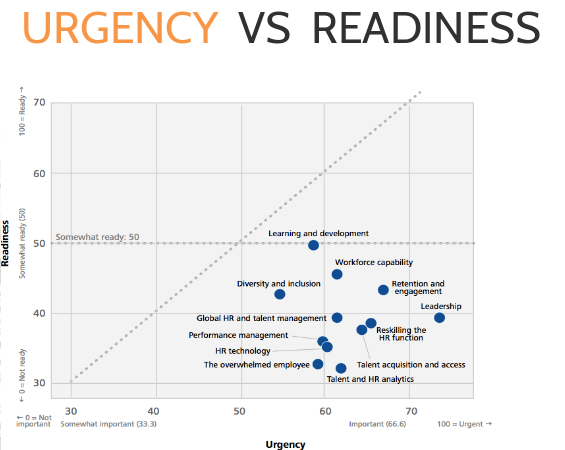
In fact, out of the twelve global business trends shown below, leadership has the highest capability gap!
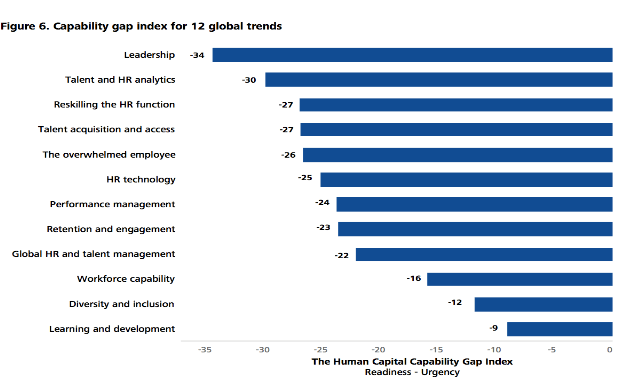
In the past leadership has been put on the long finger, but in order to succeed in the future, investing in leadership NOW will make all the difference. Leadership is critical to business success.
So, where can you start?
When it comes to identifying emerging leaders, Ron Price makes the great point that we don’t see nearly enough encouragement in businesses today.
To start with, we must believe in the potential of our Millennials to deliver. We should give them opportunities to try and fail, and to develop their own leadership skills.
I don’t think we should just focus on people’s current performance but we should focus on their future potential. Identify what type of people you have using Science based assessments.
Over the next eight weeks, we’ll be putting together the latest research to help your business identify your existing talent and work on your leadership development.
How about you? Do you have any concerns about the future leadership of your organisation? If so, what are they?
Feel free to get in touch and let us know.

How to develop presenting skills for leaders
Presenting skills are vital for effective leaders. As Dale Dixon from The Complete Leader points out, in our current climate of 124 character Tweets and short and snappy LinkedIn posts, our way of communicating is changing.

How to develop competencies and improve your planning skills
I have received a lot of questions from people around how to develop your competencies, so I would like to share some insights in this week’s blog. When we talk about developing a competency, we propose that you define the competency as clearly as you possibly can. Think about how you can improve it, develop it and work on it.

4 ways to be more productive: Tips for busy, effective leaders
In this week’s blog we’re covering planning and organising, one of the key competencies of effective leaders under the heading ‘leaders are clear thinkers’. This was one of the competencies that our seminar guests told us that they would like to work on.
Discover Your Leadership Style TODAY!
- First step to being a leader is knowing yourself. If you don’t understand yourself how can you understand others? Learn to understand others better.
- Learn what your true behaviours and driving forces are.
- Identify what leadership competencies you are strong in and where you can improve.