





5 Top Tips for Employee Engagement
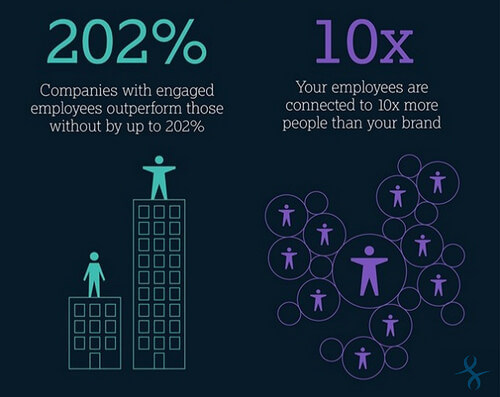
Just what is it that makes for happy, engaged workers? According to Gallup Research, 64% of Irish workers are lacking motivation and are not engaged, while one in five are actively disengaged. That’s a whole lot of people out there who are unproductive, dissatisfied and likely to spread negativity among their colleagues. So what can be done about employee engagement? Here are 5 tips.
1. Employee engagement is easy when the fit is right.
Perhaps the most important element of employee engagement is making sure that the right person is doing the right job. The job should suit the person’s interests, personality and career plans. Individuals need to ask themselves questions such as ‘what’s my behavioural style?’, ‘do I like to sit at a desk?’, ‘how does this job fit with what drives me?’. If a person can’t think to themselves ‘this is me’ while they’re doing their work, it’s not a good fit. They’re not in the right job for them and they’re unlikely to be motivated or to do productive, engaged work.
2. Set clear goals to improve employee engagement.
Goals can be great for fostering employee engagement – provided they are clearly defined, broken up into manageable pieces and revised where necessary. Sharing goals and putting them on the wall works great. This can foster a culture of accountability and can act as a powerful motivator.
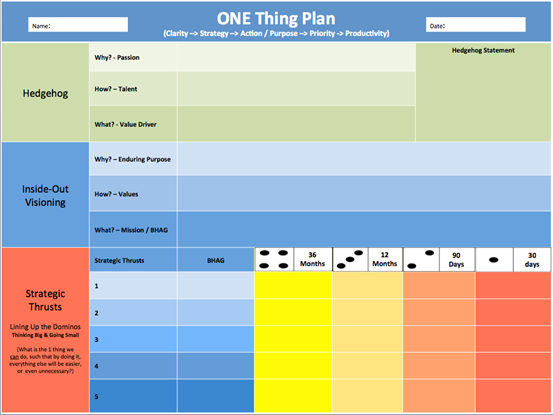
At ONEFocus we have developed a ONEThing Plan, which is a poster outlining a person’s Hedgehog (how they create value), Purpose, Big Hairy Audacious Goal and Action Plans to deliver that goal. It can be filled out by individuals, teams or the entire company. I have seen great results with this, as it gets people to think about their values, what’s really important to them and how they individually contribute to the team or organisational goals. Critically, it also gets people thinking about the things they can achieve in the next 90 days, the next 30 days, this week and today to make headway towards their goals. People can see where the organisation is going and how it cascades down to them – i.e. how they are contributing to the overall plan. They can also see the organisation’s planned future and if there will be opportunities for them in that future!
3. Give appropriate feedback and review.
When it comes to employee engagement, people need appropriate support, review and feedback on a regular basis. They need to be able to see that they’re on track, that they’re being successful and that they’re making a contribution. And if they’re not, they need to know what they need to work on. Feedback should be honest and fair. Employees need to be treated with respect and held accountable for the work they’re paid to do.
4. Give employees the chance to grow and develop
Employees who can see a career progression path are more likely to be engaged. People need to be able to see a reason for what they’re doing today. Having opportunities to learn and develop professionally can have a huge impact on employee engagement. According to Deloitte, employees under 25 years of age state that professional development is their number one driver of employee engagement, and workers under 35 place it as their second highest priority. One way to encourage this is to facilitate internal mobility within the company. Give opportunities for workers to learn new tasks outside their day to day roles.
5. Get rid of the serial disengaged.
If someone is not engaged despite all the appropriate plans, structures, clear goals and benchmarks for employee engagement being in place, then you need to lose them as quickly as possible. Why?
- Disengaged workers waste the company’s time and resources
- They can undermine and demotivate the rest of the team
- They’re wasting their own life and their own time
If it’s not working out the right thing to do for the company, the team and the individual is to move them on as quickly as possible. I remember explaining this to somebody once and he told me I was ruthless. I challenged him on this and asked him why. So he told me the story of an employee who hadn’t performed for years but he felt he couldn’t get rid of him. He described the man as being in his 50’s and needing the job desperately for his wife and kids. I asked him to consider the impact that retaining him was having on the company. He said it was disastrous. How about the impact on the team? “Oh, it’s demoralising them.” And what impact is it having on the guy’s life? He should’ve been fired ten years ago when he could’ve got a different job.
To me being ruthless is leaving someone in situ, wasting their life, undermining the team’s morale because they’re not working and everyone else is working hard, and undermining the company’s performance. Being rigorous is a different thing altogether; being rigorous is demanding certain standards of yourself and others. If it’s not working out, move them along.

How Employee Experience Leads to a Highly Productive Workforce
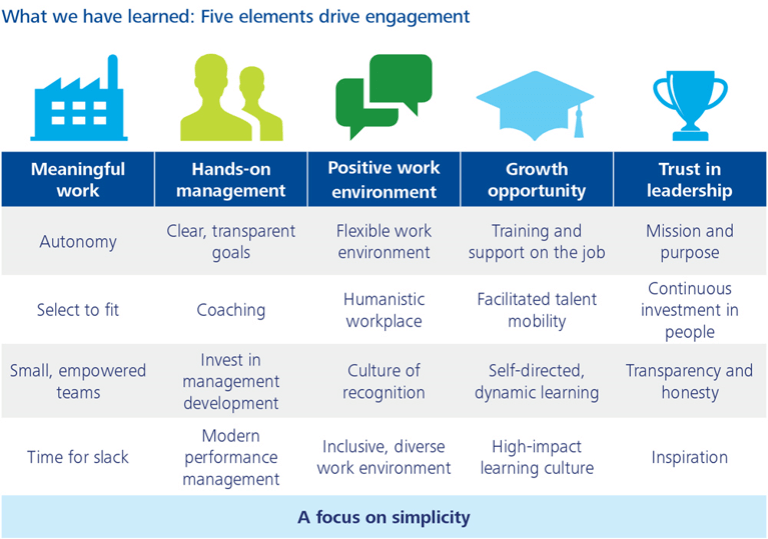
We believe in order to create engagement, employers need to move beyond believing that experience is all about extra benefits at work such as Massages Mondays and Pool Tables. Real employee experience begins with meaningful work. What can your organisation do to create meaningful work for your people? What can you do to make your people feel connected and to feel like they belong and they trust you? Isn’t this what Experience is all about?

DISC vs. MBTI
How does DISC compare to MBTI? This is a common question many people have asked us over the years. There are many different angles to consider, as both tools are used frequently in organizations, but in different ways. In this article, we will answer...

Podcast – Building Authentic Empathy
Recently Padraig spoke with Dale Dixon on the complete leader podcast. Host Dale Dixon interviews Business Coach and Strategist Padraig Berry, who is the CEO of One Focus Business Consultants and TTI Success Insights Ireland. On today's episode, Dale and Padraig...
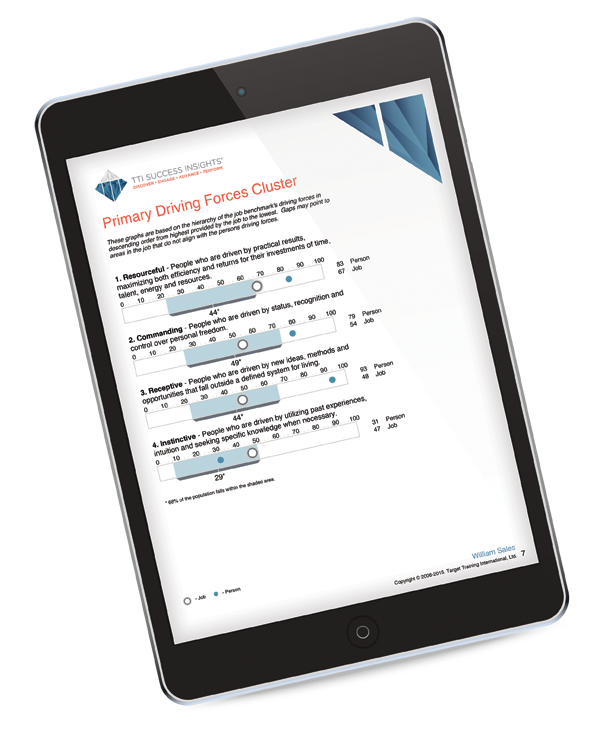
FREE DISC Assessment: Find out what your behaviours really are!
Have you ever taken a DISC Assessment? Actually… Have you ever taken a TTI DISC Assessment? Well why wait any longer, lets find out why you really behave the way you do!